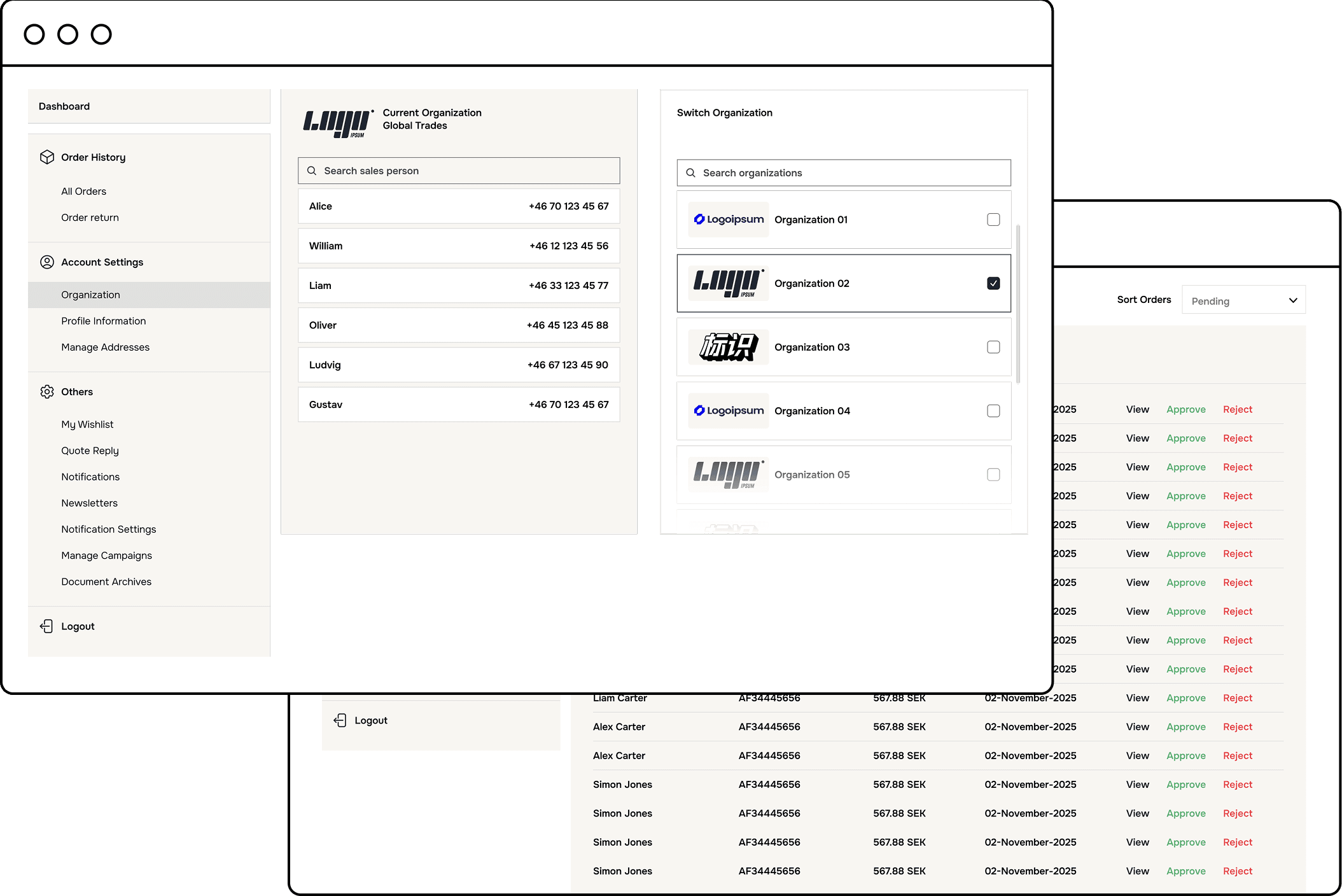
Customer Portals: 24/7 Self-Service
A B2B customer portal provides a secure, logged-in environment where your clients can manage daily tasks independently, at any time. We build self-service portals that connect directly to your business systems, displaying customer-specific information in real-time.
With an ERP-integrated portal, the customer sees the details that actually matter: unique pricing, order history, agreements, invoices, and status updates. This increases internal efficiency through automation and by shifting administrative tasks from your team to the customer. The portal reduces the workload for sales and support by becoming a practical tool for daily operations.
Benefit: More efficient service and stronger customer loyalty.
Core Functions: Role management, order placement, invoice retrieval, and claims workflows.

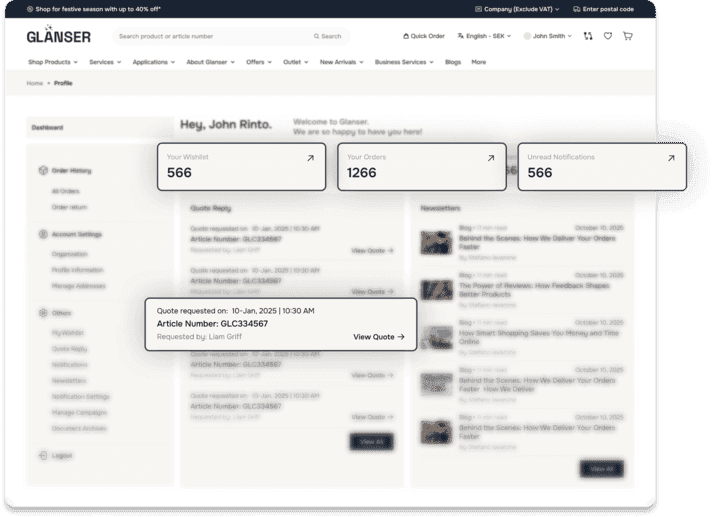
What the Customer Can Do in the Portal
A strong self-service platform removes friction from common workflows and makes information easily accessible.
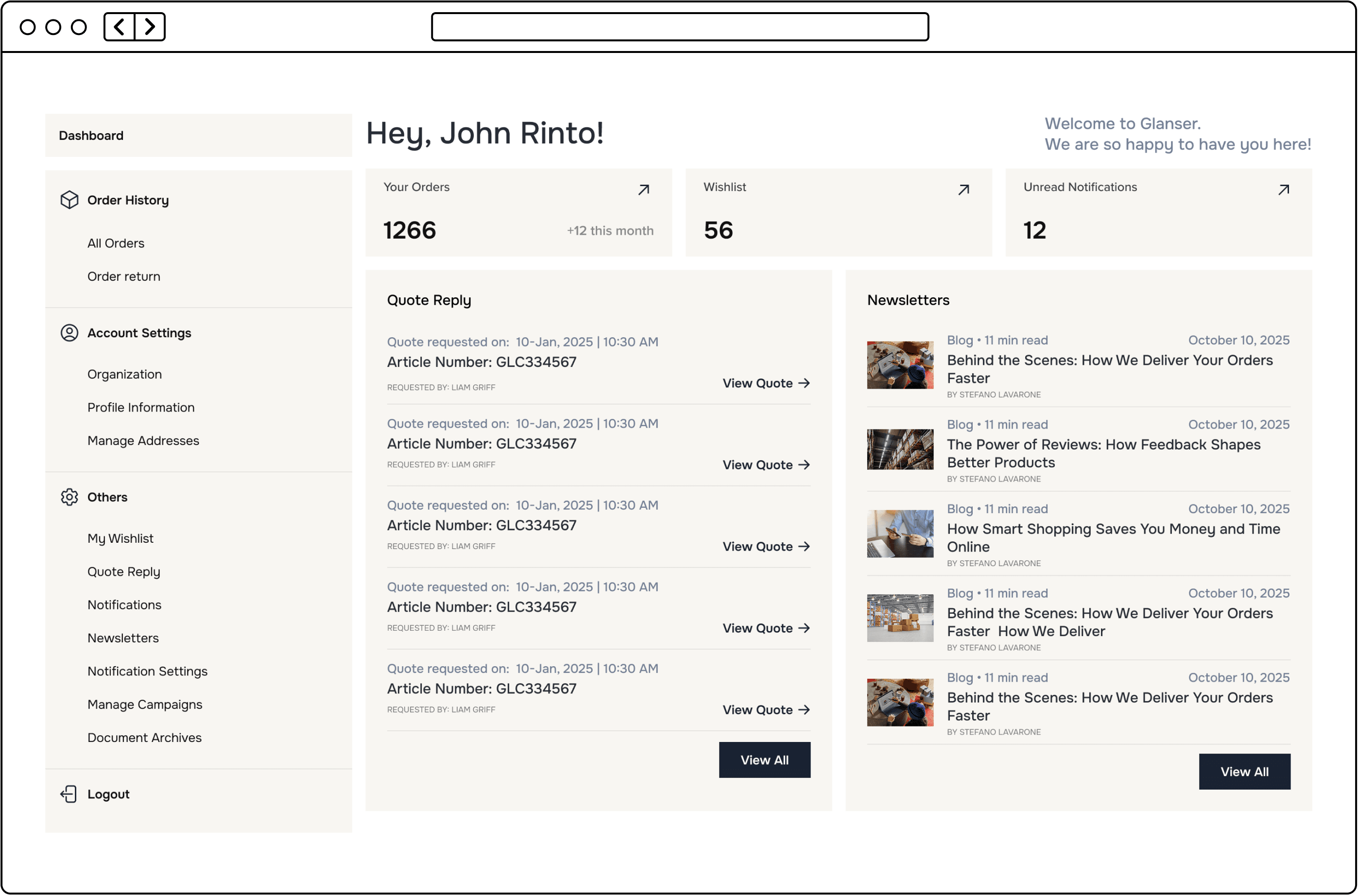
Typical Capabilities
01
View orders, deliveries, and full order history

02
Download invoice copies and documents
03
Access agreements and customer-specific terms
04
Submit claims, returns, or service cases
05
Track production and delivery status without calling support
ERP-Integrated Portal for Real-Time Data
The portal delivers maximum business value when it mirrors the absolute truth from your business system. We design the architecture so the ERP remains the single source for customer data, pricing logic, and transactions, while the portal manages the user experience and availability.
This means separating logic from presentation. The ERP calculates; the portal presents. This structure ensures the customer always sees correct stock levels and pricing, while integrations are built to remain robust during future ERP upgrades. This builds trust because the information the customer acts on is always current.
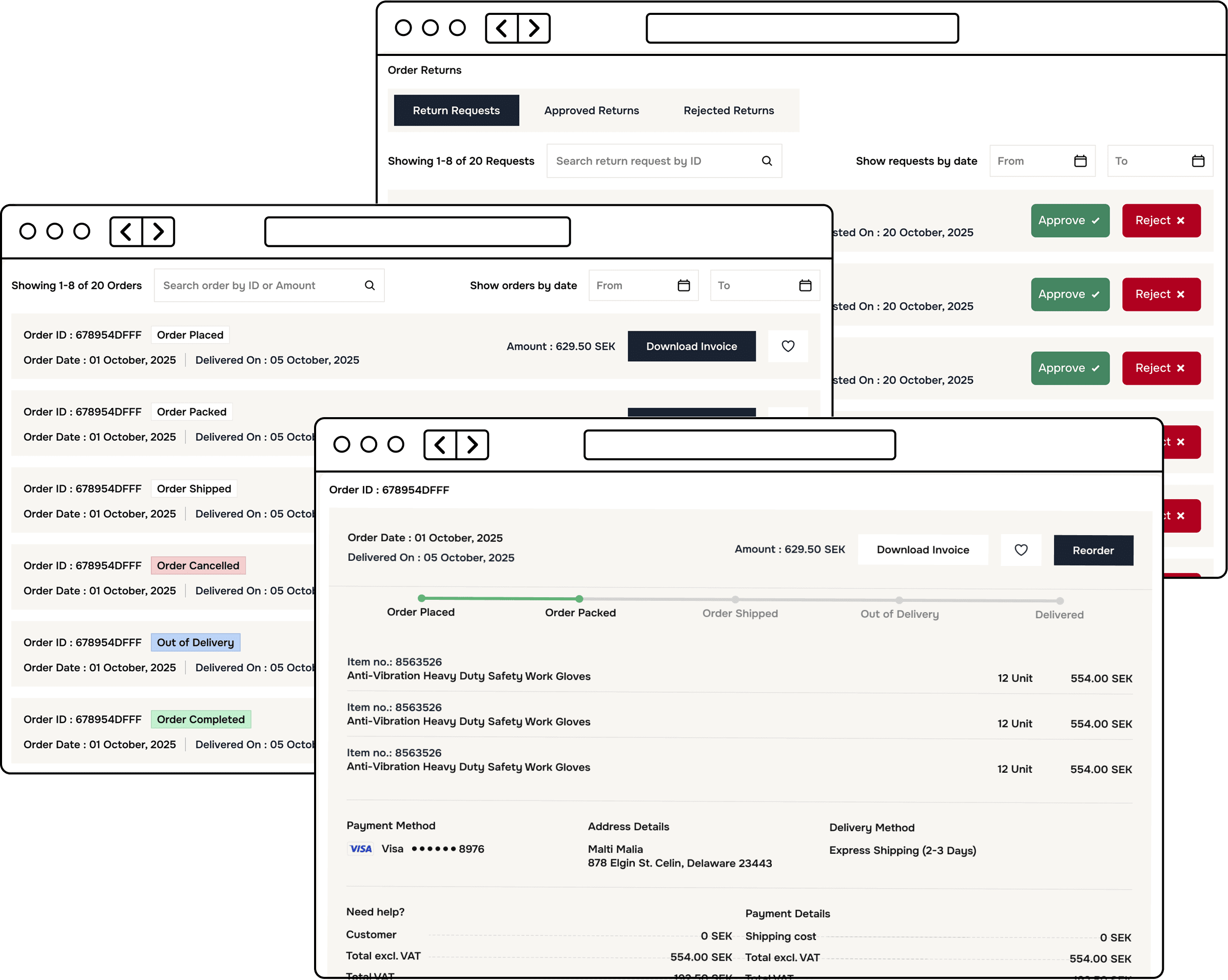
Roles, Permissions, and Organizational Structure
In the B2B world, the customer is rarely a single individual, but a team with different responsibilities. Our solution reflects this reality through advanced management of roles and permissions.
We make it possible to tailor access so that a buyer sees products and pricing, while the finance department only accesses invoices and agreements. The system supports complex structures with multiple users per account and specific rules for subsidiaries or regions. This allows the solution to scale seamlessly from smaller companies to large corporate groups with high security and governance requirements.